


One Key, Multiple Doors: How Master Key Systems Work for Businesses
Managing a commercial property can mean dealing with dozens of doors, keys, employees, and restricted areas. As a business grows, keeping track of who has access to what can become increasingly difficult.
A master key system offers a practical way to organize that access. Instead of giving everyone the same key, businesses can create different levels of access while keeping multiple doors within one organized locking system.
But how does a master key system actually work, and when does a business need one?
What Is a Master Key System?
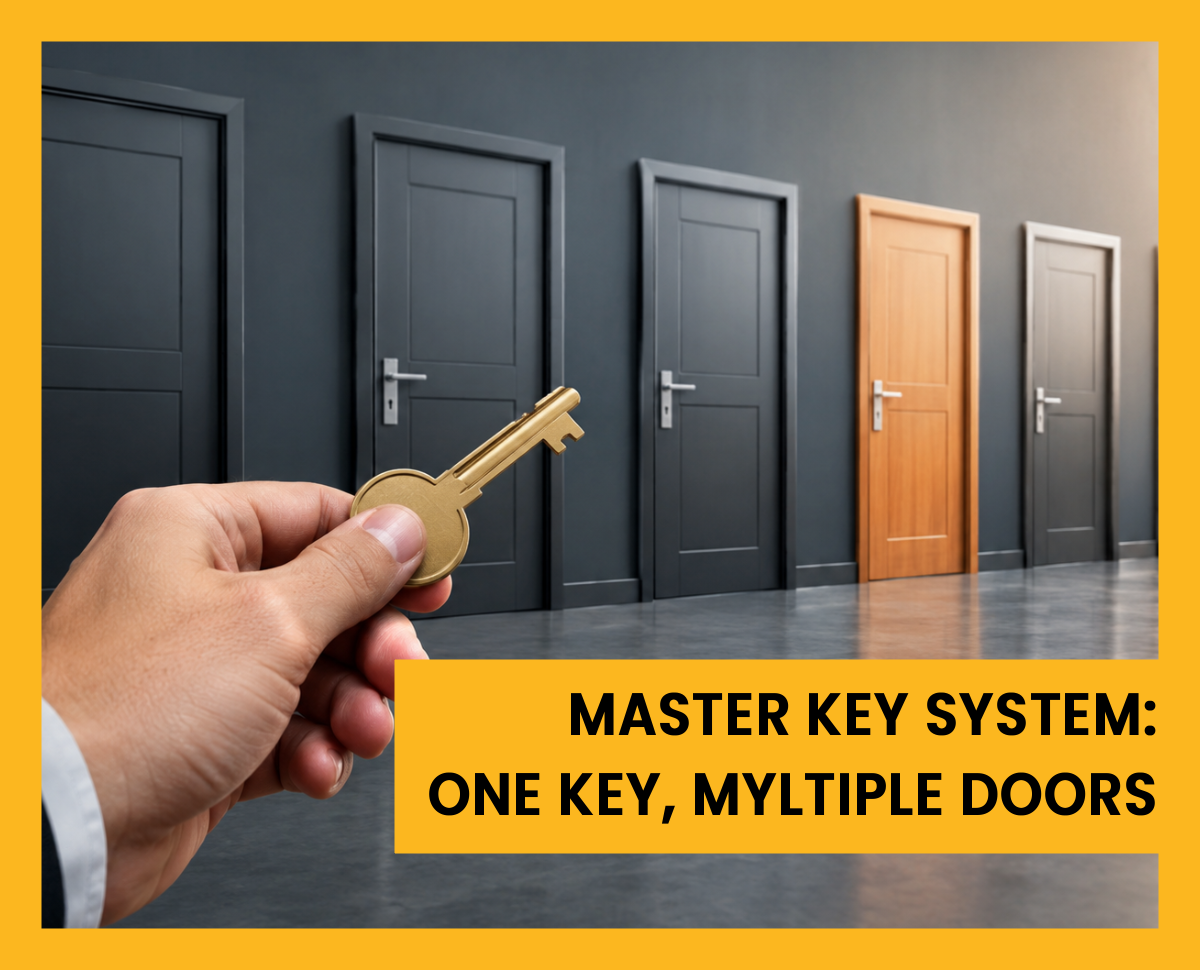
A master key system is a group of locks and keys designed to provide different levels of access within the same property.
For example, an employee may have a key that opens only their assigned office. A manager may have a key that opens several offices or work areas, while an authorized property manager may have a master key that operates multiple doors throughout the building.
The important part is that different keys can provide different levels of access.
This makes master key systems particularly useful for commercial properties where employees, managers, maintenance staff, or property personnel don’t all need access to the same areas.
How Does a Master Key System Work?
A master key system is built around a hierarchy of access.
An individual key can operate a specific lock, while a higher-level master key can operate multiple locks within the system.
For example:
Individual key: Access to one designated area
Sub-master key: Access to a specific group of areas
Master key: Access to multiple areas within the system
The exact structure depends on the property and its access requirements.
This approach allows a business to control who can enter particular areas without having to give every employee a key that opens every door.
Why Do Businesses Use Master Key Systems?
One of the biggest advantages is simply better key management.
Without a master key system, someone who needs access to several rooms may have to carry a large collection of individual keys. In a busy commercial environment, that can quickly become inconvenient.
A master key system can help businesses:
- Reduce the number of keys certain employees need to carry
- Organize access between different departments or areas
- Give managers access to the areas they need
- Keep restricted rooms limited to authorized personnel
- Make key management easier as the business grows
The goal isn’t simply to have fewer keys. It’s to create an access structure that matches how the property is actually used.
Which Businesses Can Benefit From a Master Key System?
Master key systems can be useful for many types of commercial properties.
They may be particularly practical for:
- Office buildings
- Retail stores
- Commercial properties
- Hotels and hospitality businesses
- Industrial facilities
- Property management companies
- Buildings with multiple departments or tenants
For example, an office building may have individual keys for employees, additional access for department managers, and a higher level of access for the property manager.
This allows different people to access the areas they need without giving everyone the same level of entry.
What Happens When an Employee Leaves?
Staff changes are an important part of commercial key management.
When an employee leaves, simply collecting their key may not always be the end of the process. Businesses may also need to consider who currently has access to the same areas and whether the existing key structure still makes sense.
Depending on the situation, a commercial locksmith can rekey affected locks or make changes to an existing master key system.
This can be particularly useful for businesses with frequent staff changes or multiple employees who have access to shared areas.
When Should You Consider a Master Key System?
There isn’t one specific type of business that needs a master key system. The need usually becomes more obvious as the number of doors, employees, and access requirements increases.
You may want to consider one if:
- Employees regularly need access to multiple areas
- Managers are carrying several different keys
- Your property has restricted rooms or departments
- You’re managing a building with multiple tenants
- Your current key system has become difficult to keep organized
- Your business is expanding into additional rooms or areas
A locksmith can assess the existing locks and help determine whether a master key system makes sense for the property.
Master Key Systems for Toronto Businesses
For businesses in Toronto and the GTA, a master key system can provide a practical way to organize physical access across a commercial property.
Locksmith Express offers master key system design and implementation as part of its commercial locksmith services. Whether you’re managing an office, storefront, or larger commercial property, the right key system can make everyday access easier to manage.
One Key, Multiple Levels of Access
A master key system isn’t simply about having one key that opens every door. Its real purpose is to create different levels of access within one organized system.
For businesses with multiple doors and different responsibilities, that can make key management considerably simpler.
If you’re carrying a growing collection of keys or trying to keep track of who should have access to different areas of your property, a commercial master key system may be worth considering.